





Ensure the delivery of the National Strategic Action Plan for Rare Disease and establish an implementation committee.
The National Strategic Action Plan, released in 2020 with bipartisan support, provides a comprehensive framework for improving diagnosis and care for Australians living with a rare disease, yet its implementation has not been fully achieved. Progress on delivering the National Strategic Action Plan would be assisted by the federal government establishing an implementation committee which brings together the health department, National Disability Insurance Agency and other relevant departments (including economic agencies), patient groups, clinicians, and industry. The federal government should also work with the states and territories to encourage the development of rare disease strategies within their jurisdictions, aligned with the National Strategic Action Plan.
Create a National Office of Rare Disease in the federal Department of Health, Disability and Ageing.
This was a key recommendation of the House of Representatives Standing Committee on Health's New Frontier inquiry. A National Office would assist in federal coordination and the development of policy to support Australians living with a rare disease, including implementation of the National Strategic Action Plan. Such an agency would complement the work of the recently established, Genomics Australia. The National Office should also be tasked with:
- Establishing a national advisory panel on the management of rare diseases including providing real time advice on new treatments and strategies and undertaking horizon scanning for the sector.
- Coordinating government agencies to ensure people living with a rare disease have the quality of life support they require. For example, employment programs should seek to ensure employers are better able to support people living with rare disease to maintain or recommence employment.
- Providing a framework for comprehensive rare disease registries and data repositories, which are vital to the provision of care, clinical trials and research
Ensure faster and fairer access to innovative new medicines by reforming the Pharmaceutical Benefits Scheme (PBS).
The process of securing access to affordable medicines through a PBS listing is currently taking a median time of 22 months after registration with the TGA11. For rare disease medicines, this wait can be even longer with multiple resubmissions frequently required. These are often innovative medicines providing effective treatments for the first time and can save and change lives.
The federal government commissioned a major review of the health technology assessment (HTA) processes used to determine the listing of medicines on the PBS, recognising Australian patients are waiting too long for access to new treatments. Implementation of the review's recommendations would help ensure rare disease patients have faster access to innovative medicines. Reforms that would move the dial for rare disease patients include streamlining the assessment process, better valuing the long-term benefits of rare disease medicines, including the broader benefits of new treatments in economic assessments, and creating a fund for early access to high impact new medicines.

I was diagnosed as a baby with the rare disease atypical haemolytic syndrome (aHUS) which can be life-threatening. It's so important that the government ensures new medicines are listed as quickly as possible on the PBS as any delay can have severe consequences like kidney-failure or heart damage. Even worse, it may mean that people like me don't have access to lifesaving treatments.
Bianca, living with aHUS.
Expand the Life Saving Drugs Program (LSDP) to ensure more patients with an ultra-rare disease have access to life-changing medicines.
The LSDP supports access to medicines for ultra-rare diseases that do not meet the normal criteria of the PBS but are recognised as lifesaving. However, many ultra-rare disease patients miss out on new treatments for severe conditions because their condition is not considered life-threatening. The LSDP should be expanded to include medicines for ultra-rare diseases where there is a significant reduction in morbidity or disability. The pathway to LSDP funding should also be streamlined to remove the lengthy and unnecessary processes currently required which delays access for patients.
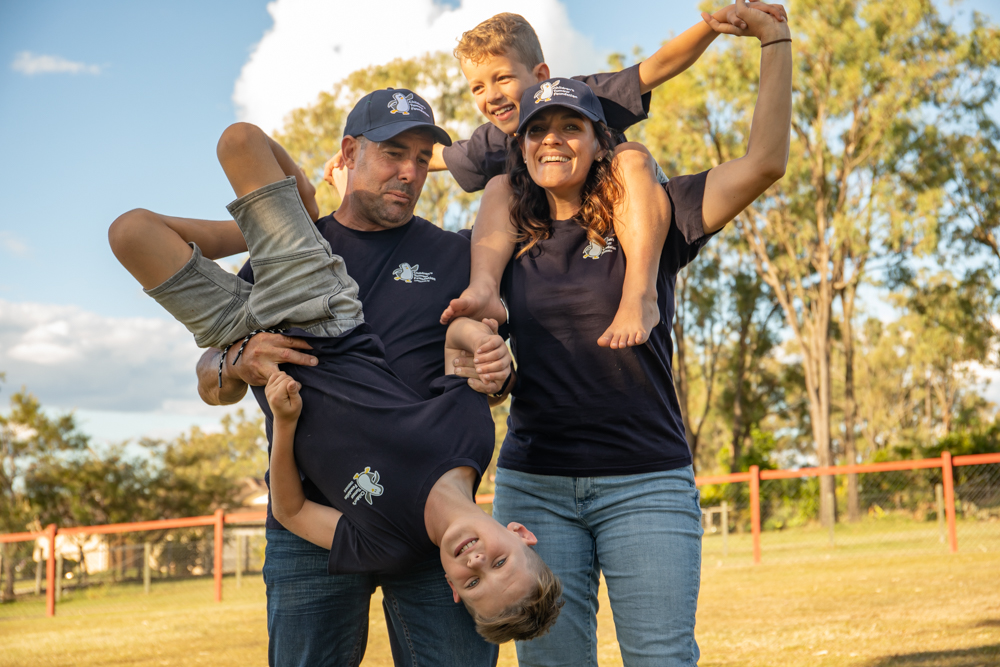
My son, Grayson, was diagnosed with NF1 as an infant but finding knowledgeable healthcare specialists has been a struggle. As there is no centre of expertise in Queensland, it took me six years to build up the care team that I currently have. It's also compromised my career in the Defence Force, as I have not been able to move around due to the lack of care around Australia. Talking to a doctor who has never heard of NF is frustrating and wastes everyone's time. As parents, we should not have to educate doctors when we are the ones who are seeking help. All of these issues have an impact not just on me and my son, but on the whole family.
Jennifer, mum of Grayson, living with Neurofibromatosis Type 1
Support the expansion of Rare Disease Centres of Expertise for patients with federal start-up funding.
Many patients face significant challenges accessing specialist care based on where they live or other factors such as age. With its commitment to improve primary care and health equity and its national leadership role in rare disease policy, the federal government can improve access to appropriate specialist care by establishing a Rare Disease Centres of Expertise start-up funding program, particularly to support patients in smaller states, regional and remote areas and in indigenous communities. Such support would align with the support provided by the federal government for cancer hubs and centres. Rare disease hubs can ensure access to specialist support, triaging, diagnosis and treatment are available to patients and their doctors and help close the gap between clinical care and medical need.
Make sure patients' voices are always heard in government decisions.
Progress has been made in improving patient involvement in the delivery of government policies and other actions to support people living with a rare disease in areas such as the listing of medicines on the PBS. But there is more to be done, and this must remain a priority for the federal government. It is also vital patient groups, such as Rare Voices Australia, and those representing patients with specific diseases are properly resourced by the federal government through increased direct funding for their programs. Patient groups play a key role in education, awareness and support for patients and in advocating for their needs.
Finish building the National One Stop Shop (NOSS) for clinical trials.
Clinical trials are crucial in the research and development process for new treatments and can provide early access for Australian patients to innovative medicines. The federal government has provided funding and is leading the development of a streamlined process for clinical trials which will help ensure Australians can access those trials. Finishing this essential process must be a priority, so that Australians can join trials more easily, including those living with a rare disease.
Establish a process to expand access to genetic diagnosis and services.
Advances in genomics are having a profound impact on our understanding of rare diseases and are allowing the development of new tools for diagnosis and treatment. The government's new agency, Genomics Australia, will play a key role in ensuring rare disease patients are the beneficiaries of its potential. Planning and support are needed to ensure Australia is equipped with a genomics health workforce. The federal government should support additional specialist training positions for genetics and rare disease to build mainstream expertise in the various specialties required to improve the diagnosis of rare disease and the delivery of precision medicine. Genetic testing will continue to play an increasingly important role in ensuring early diagnosis of rare diseases and will need to be supported by accessible genetic counselling. The federal government can support this process by including Medicare item numbers to support genetic counselling to improve diagnostic test access, management plans and preventative medicine. Equitable and timely access to diagnostic genomic testing is being hindered by slow assessment processes for public funding. Inconsistent processes result in some diagnostic tests with a very strong evidence base remaining unfunded, for example, for rapid and ultra-rapid testing for critically ill children.

Genomics is revolutionising the way we diagnose and treat patients with rare diseases. Genetic testing can help ensure patients are not waiting years to receive a correct diagnosis. It's vital we build the workforce and the systems we need to support the transformative role of genomics in healthcare. As a start, the federal government needs to support the growth of the genomics workforce and also Medicare access to support patients to see genetic counsellors outside the Hospital setting.
Mimi Berman, Clinical Associate Professor, Head, Department of Clinical Genetics NSLHD, President, Human Genetics Society of Australasia
Progress the use of whole genome sequencing in the Newborn Screening (NBS) Program.
The NBS has played a crucial role in testing newborn babies for serious disease. Progress has been made by the federal government to ensure national consistency in the NBS screening program and new processes to increase the number of diseases tested using the traditional 'heel prick testing' method. Whole genome sequencing provides the opportunity to expand the number of genetic conditions that are part of the NBS from dozens to hundreds. This will require considerable community consultation, large-scale national studies, and consideration of logistical and ethical issues in its deployment to ensure community support and confidence.
While research and pilot programs have been funded by the federal government, it is time to progress this diagnostic opportunity by establishing a process for its deployment in Australia. Treatable conditions, which benefit from early childhood identification should be prioritised for early implementation of whole genome sequencing. As experience grows, a process should be defined to add further genetic conditions.
Through the National Health Reform Agreement (NHRA), work with the state and territory governments to support rare disease patients.
Rare diseases, despite their impact on up to 2 million Australians, are not currently considered in the NHRA. As a starting point, the federal government should seek a commitment from states and territories to develop rare disease strategies and action plans for their jurisdictions, aligned to the National Strategic Action Plan, as part of the next NHRA.